The mental model that prevents most early stalls
MONOWAVE looks like a platformer, but the platforming is usually the visible layer of a state puzzle. The important resource is not health or damage; it is the emotion currently attached to Mono or to a spirit in the room. Current demo footage shows players getting stuck when they change state too early, reach the next obstacle, then realize the emotion source they need is behind them.
Use a three-question scan every time the route stops: What is physically blocking me? Which emotion changes that type of obstacle? Should the emotion stay on Mono, or should I pass it to the spirit? This is more reliable than trying every color at random.
Learn the four jobs, not four colors
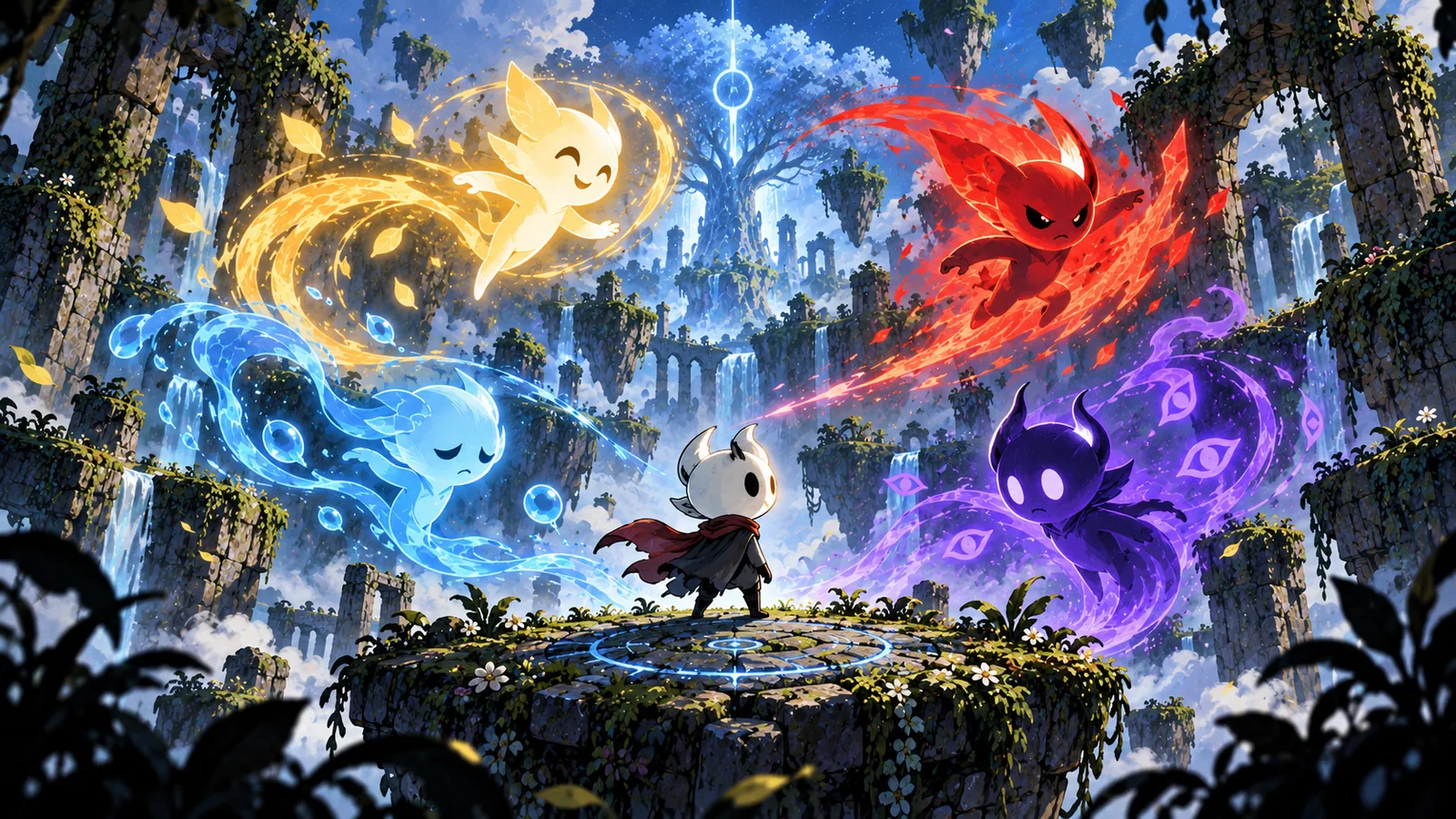
Happiness is the first state to test when you need extra height or a lighter movement response. Sorrow is tied to slipping through narrow spaces and later water-heavy traversal. Anger appears in wall-jump and force-oriented interactions. Anxiety exposes danger and helps with routes where hazards are the main problem.
The exact animation can change depending on whether the emotion is on Mono or another spirit. That distinction matters: a creature that is hostile in one state may become a platforming helper in another.
Spirits are part of the level geometry
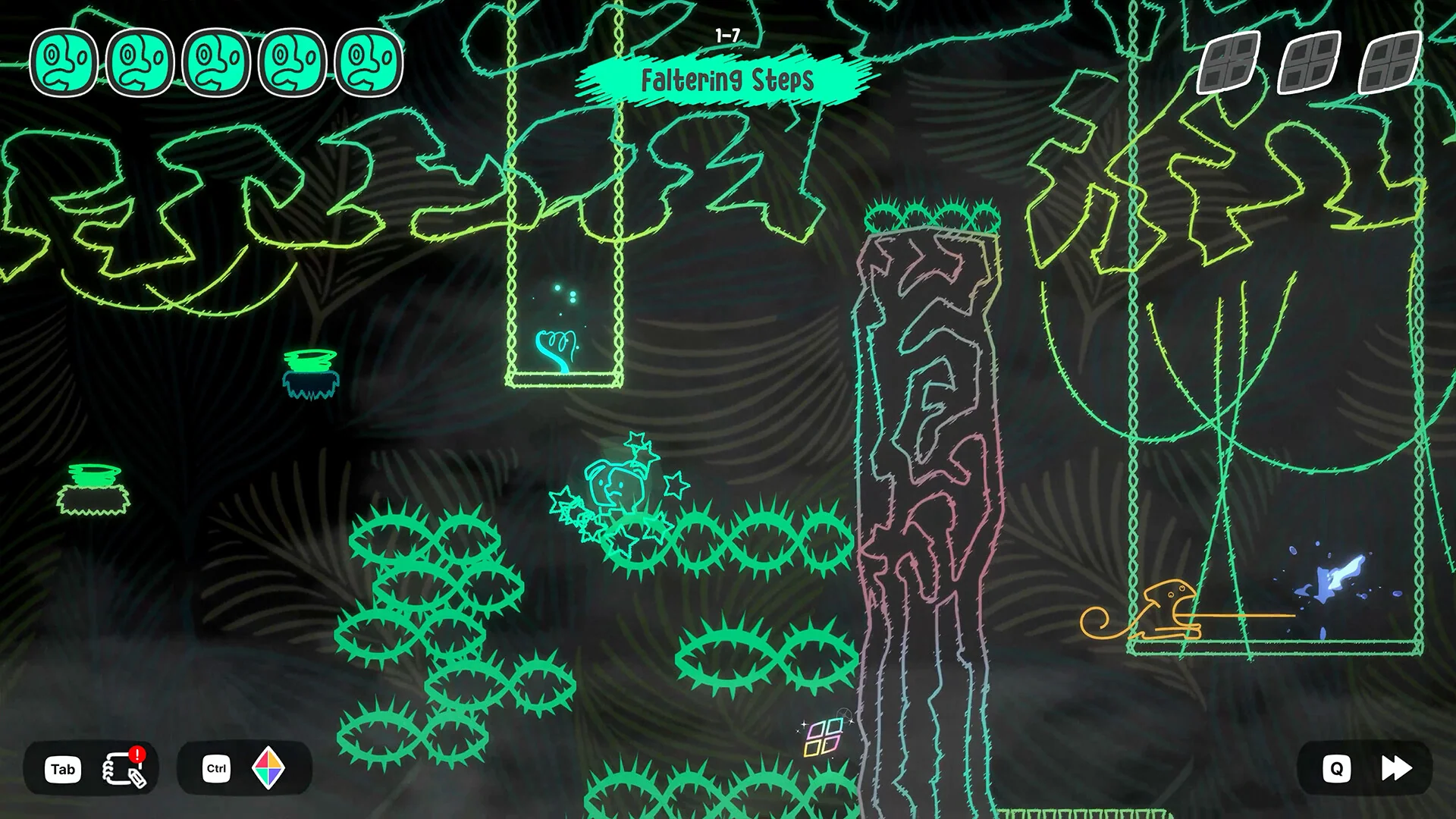
The official game description says your powers resonate with inhabitants and affect their behavior. The demo makes that mechanical. An alligator-like jungle spirit can be a threat in one state and a way to gain height in another. Butterflies and other small spirits also participate in the state-transfer chain. Do not mentally file creatures as “enemy” or “friend” forever; ask what they do in this emotion.
A reliable room-by-room workflow
- Scan forward before touching a color source.Look for high ledges, narrow gaps, water, wall surfaces, spikes or a spirit that blocks the lane.
- Pick the likely job.Height → Happiness. Tight passage/water → Sorrow. Wall/force → Anger. Hazards → Anxiety.
- Decide the target.If Mono needs the movement, keep it. If the creature must change, transfer it.
- Check the exit before committing.Some sequences chain two states. Preserve access to the second one.
- Use the checkpoint as a puzzle reset, not a punishment.If you spent the only useful state and cannot recover, resetting cleanly is faster than forcing the room.
Five mistakes that look like hard platforming
- Jumping harder instead of changing state. If a ledge feels barely impossible, it often is intentionally impossible in the current state.
- Putting the emotion on the wrong target. The right color on Mono can still be the wrong solution if the spirit needs it.
- Using the needed state one screen too early. Current footage repeatedly shows players backtracking for Sorrow or Happiness after spending it.
- Forgetting what Anxiety is for. Its value is information and hazard handling, not just movement speed.
- Treating a missed pickup as proof the route is wrong. Some optional-looking branches are collection detours, not the main exit.
Hints, checkpoints and difficulty are part of the design
Pre-release footage shows Normal, Hard and an Assist option. The exact shipping behavior should be rechecked after release, but the intent is clear: if a room is teaching an emotion interaction and execution is getting in the way, using the easier support settings is not bypassing the puzzle. It gives you more space to understand it.
For a clean first run, use Normal, read the in-game book/tutorial entries when a mechanic appears, and only chase a missed collectible after you understand the route. The World 1 checklist is built around that order.